Common Mistakes New Crypto Gamblers Make
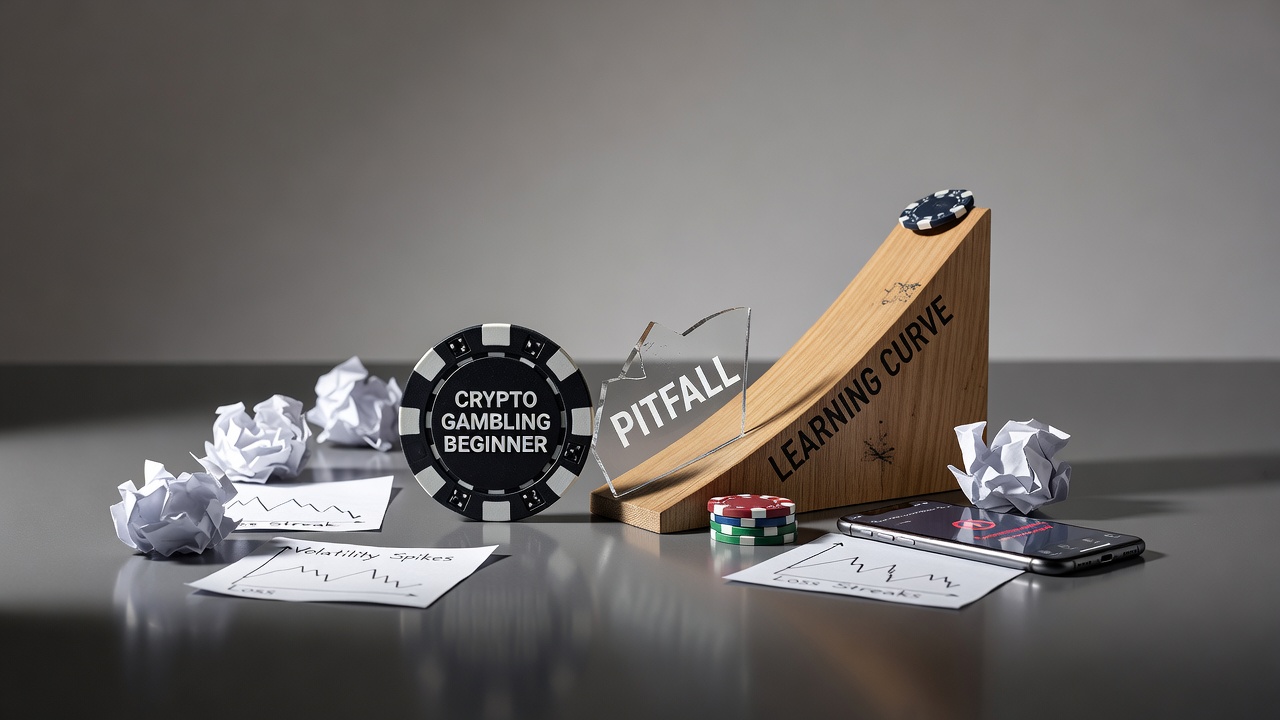
New crypto gamblers make mistakes that cost them their bankroll. The first mistake is trusting the wrong platform.
New crypto gamblers make mistakes that cost them their bankroll. The first mistake is trusting the wrong platform. A shiny new crypto casino launches. It promises provably fair games. It has no licensing. It disappears in six months. The bankroll is gone.
The second mistake is not understanding volatility. A crypto withdrawal might be worth one thousand dollars when you initiate it and nine hundred dollars when it lands. The exchange rate moved. You experienced loss you did not plan.
The third mistake is treating crypto as special. Crypto gambling is still gambling. The house edge still exists. The bankroll still drains. Crypto does not change the mathematics.
Specific Errors
Holding entire winnings in crypto hoping for appreciation. You win five hundred dollars in crypto. You hold it hoping it doubles. It crashes by half. You lost the windfall chasing gains.
Over-betting in crypto casino games. Some platforms tempt you with high reward ratios. Betting too much relative to your bankroll means you can be wiped out by small losses. This is reckless.
Not securing your private keys. You withdraw to a wallet and store the seed phrase on your phone. Your phone is stolen. The bankroll is gone. Private key security is not optional.
Playing on unregulated platforms because they offer higher odds. Higher odds at an unregulated casino means the platform is skimming. You are not playing against a fair game. You are being stolen from directly.
The Best Practice
Play on platforms with institutional backing. Play at licensed casinos that offer crypto. Keep crypto winnings in stables or exchange immediately. Do not treat crypto gambling as investment. Treat it as gambling and expect to lose the bankroll.
Additional Strategic Insights
The regulatory environment around this topic has evolved significantly over the past decade. Understanding how regulations affect your choices helps you navigate the landscape more effectively. Different jurisdictions apply different standards, and what is permitted in one location may be restricted in another.
Your personal decision-making framework should account for multiple variables. How much are you comfortable losing in a single session? What is your total monthly gaming budget? When do you decide to walk away? These questions deserve serious consideration before you ever place a bet.
The mathematics of gaming is unforgiving but also predictable. House edges compound over time. A two percent edge means you lose two dollars for every hundred wagered on average. Over time, variance smooths out. Small edges become certainty.
Consider also the opportunity cost. Time spent gaming could be spent earning income elsewhere. If you enjoy gaming purely for entertainment value, this may not matter. If you are trying to profit, this calculation becomes central to whether the activity makes sense.
The most important factor is self-awareness. Know your triggers. Know when you play poorly. Know when you are chasing. Know when to stop. This knowledge is worth more than any strategy or tip.
Risk Management and Personal Accountability
The foundation of responsible gaming is tracking your spending. Maintain a record of how much you deposit, how much you win, and how much you lose. This transparency helps you see patterns in your behavior. Many players underestimate their actual spending. Written records prevent this self-deception.
Set a monthly budget and adhere to it. The budget should be money you can afford to lose entirely. Treat this money as spent the moment you allocate it to gaming. If you win, that is a bonus. If you lose it all, you have not overspent.
Be honest about your motivations. Are you gaming for entertainment or to generate income? If it is entertainment, set a budget and enjoy it. If it is for income, understand that most people who try to profit from gaming ultimately lose money. The house edge exists precisely because the odds favor the casino over time.
When to Stop and How to Get Help
Gaming should never come at the expense of basic needs. Food, housing, medical care, and family obligations come first. Gaming money is discretionary money. When gaming starts affecting these priorities, you have crossed a line.
Warning signs include: chasing losses, gambling with money reserved for bills, lying about gaming activity, feeling anxiety about gaming, and using gaming to escape problems. If you experience any of these, it is time to seek help.
Resources exist. The National Council on Problem Gambling operates a helpline at 1-800-522-4700. Gamblers Anonymous meets across the country. Counselors specializing in gaming addiction can help. These resources are free or low-cost.
Your decision to game is personal. But your decision to game responsibly affects everyone in your life. Make choices you can live with long-term.