Martingale System in Live Roulette: Why It Eventually Fails
The martingale betting system seemed mathematically inevitable. It felt unbreakable. But all systems encounter limits. Understanding where they fail reveals the game's true nature.
Picture this: you're sitting at a live roulette table. You decide on a system. Wager one dollar on red. When you lose, double to two dollars. When you lose again, escalate to four. Continue until you hit red.
Once red materializes, the accumulated losses vanish. One dollar profit emerges. The system worked. You pocket the dollar. You restart.
This is the martingale's appeal. It appears to transform losing sequences into profit. Mathematically, it seems foolproof.
The Sequence Narrative
Wednesday evening begins with promise. Five consecutive reds. Your profit: five dollars. You feel invincible.
Thursday introduces reality. Six black spins. Your progression: one, two, four, eight, sixteen, thirty-two dollars. You've now wagered sixty-three dollars total to chase a one-dollar profit.
The thirty-second-dollar bet arrives. Red finally hits. You recover. Profit secured.
But something happened. Your bankroll depleted more than expected. The winning path required escalating commitments.
The Limit Encounter
Friday's session reveals the system's boundary. Black streak extends to nine. Your progression: one, two, four, eight, sixteen, thirty-two, sixty-four, one-hundred-twenty-eight, two-hundred-fifty-six dollars.
Your bankroll: five hundred dollars. You cannot place the five-hundred-twelve-dollar bet required to continue. The system breaks.
No longer mathematical inevitability. No longer foolproof. Just a cascade of losses that depleted your capital before the winning spin arrived.
The Probability Encounter
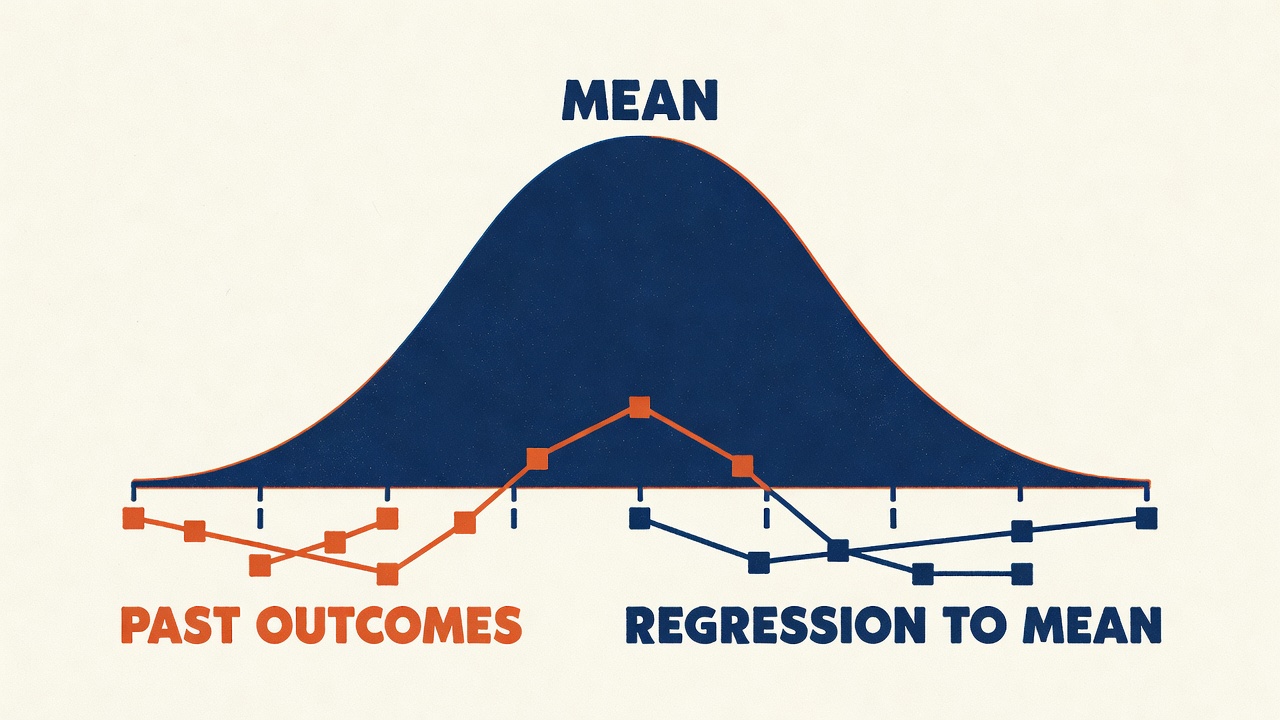
Roulette wheels do not care about your progression. Black and red each have probability slightly below fifty percent (due to the zero). Long streaks are guaranteed to happen.
Statistically, a ten-black-streak occurs approximately once per thousand spins. A fifteen-black-streak occurs approximately once per thirty-three thousand spins.
If you play roulette extensively, you will eventually encounter a streak longer than your bankroll can support.
The Hope Trap
The martingale works perfectly until it doesn't. Every losing session followed by a winning spin confirms the system's viability. Every streak that exhausts your bankroll feels like extraordinary misfortune.
This creates a psychological pattern. The system appears sound. When it fails, the failure feels like bad luck rather than system flaw. You maintain faith.
The next attempt begins with renewed conviction. The system worked before. It just needs adequate capital. So you increase your bankroll and try again.
The Mathematical Floor
Here's the fundamental flaw. The martingale does not create profit through strategic betting. It creates perceived profit through outcome sequencing.
A black streak of length N costs the martingale player the sum of all bets in the progression. The final winning red bet recoup previous losses and generates one-dollar profit.
But if a black streak exceeds your capital, you cannot place the final bet. The system fails completely. You're down everything.
The Capital Reality
To guarantee the martingale works, you would need infinite capital. Then no streak could exceed your reserves. But infinite capital does not exist.
For any finite bankroll, a black streak of sufficient length will exhaust it. The longer you play, the more certain you become that such a streak will occur.
The Observation
I watched people at roulette tables employ the martingale. I watched them win. I watched them lose everything. The pattern repeated identically.
The system is not defective in theory. The system is defective in practice because practice involves finite resources and infinite time horizons.
Play long enough and the inevitable streak arrives. When it does, the martingale becomes irrelevant. You're simply out of money.
That's not luck. That's mathematics finally revealing what it intended all along.