Why Some Casino Apps Aren't on the App Store
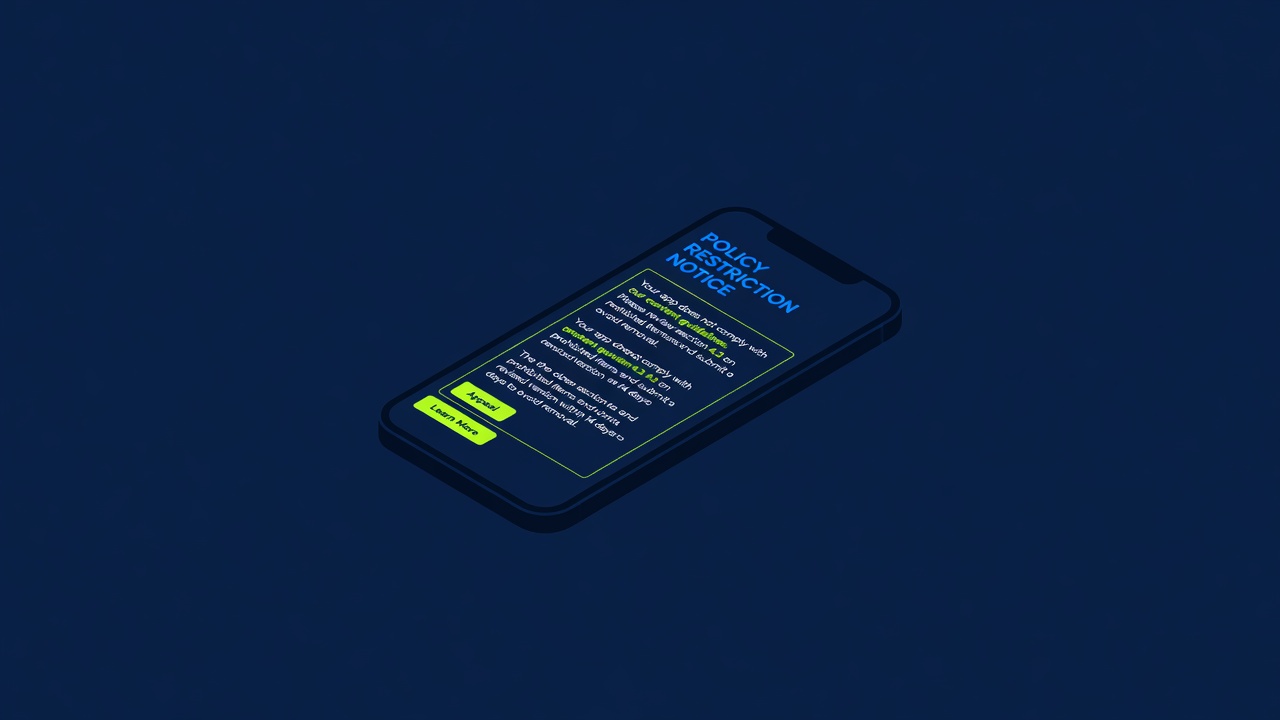
Apple's App Store policies prohibit applications that facilitate real-money wagering on the platform itself. This is the core reason.
Apple's App Store policies prohibit applications that facilitate real-money wagering on the platform itself. This is the core reason. It is not a gray area.
The App Store Review Guidelines, section 4.7, state explicitly that apps offering real money gambling must be restricted to specific countries or regions and must comply with all relevant laws.
Key Points
For most jurisdictions outside the US and a few European countries, this means the app cannot exist on the App Store at all.
The secondary reason is that Apple takes 30 percent of all in-app purchases and transactions. A casino operator loses 30 percent of every deposit made through the App Store
his is economically unsustainable. An operator earning 2.5 percent house edge cannot survive after losing 30 percent of their revenue to Apple's cut.
The result: casinos that operate in markets where the App Store is the primary app distribution channel cannot profitably operate on that channel.
The technical solution that operators use is called a progressive web app, or PWA. This is not a native application. It is a website that is bookmarked to your home screen and behaves like an app: it opens full-screen, it has offline capability, it sends notifications. From the user's perspective, it looks and acts like a native app. From Apple's perspective, it is not subject to App Store restrictions because it is a web service, not an application.
This is the distinction that allows casinos to operate on iPhone in jurisdictions that the App Store prohibits. The user navigates to the casino's website. They bookmark the site or save it to the home screen. They play through a web interface.
The UX is nearly identical to a native app for most use cases. The performance is nearly identical if the PWA is built to modern standards. The primary difference is that the PWA is updated server-side, so new features roll out instantly, whereas a native app requires the user to update.
Here are the jurisdictional constraints that make this distinction matter:
In the United Kingdom, real-money betting apps are permitted on the App Store under UKGC licensing. In most European Union countries, they are not. In Canada, they are not. In Australia, real-money gambling apps are explicitly prohibited.
The effect is a fragmented landscape. A European player using an iPhone cannot download a casino app from the App Store. An American player in certain states cannot. A UK player can, but only if the app is licensed under UKGC authority.
The PWA workaround is not perfect. It lacks certain capabilities that native apps have. It cannot access the device's camera or microphone with the same ease. It cannot use all of the device's sensors for biometric authentication. But for the purposes of placing bets and playing slots, it is sufficient.
The deeper design principle here is that Apple, as a platform owner, has chosen to restrict monetization models on its platform. Casinos that operate at scale have adapted by building excellent PWAs. These are not afterthoughts. They are primary products, built to native-app standards. The underlying principle is that exploitation works when your opponents are not playing optimally. Most of your competition is not optimal. They are human. They are tired. They are emotional. They are making mistakes. The strategy that works against mistakes is the strategy you should play. Not the strategy that works against perfect play. Not the strategy that works in theory. The strategy that works against the actual people you're facing.