Time-Out Features at Online Casinos: A Short-Term Responsible Gambling Tool
So I'm sitting at the bar, right, and the guy next to me, Danny, he's been a regular for maybe five years. Good guy. Pays his tabs.
So I'm sitting at the bar, right, and the guy next to me, Danny, he's been a regular for maybe five years. Good guy. Pays his tabs. We got to talking about online gambling, which was not typical for us. The thing is, he'd gotten into it during the pandemic like everybody else. And he got into it too deep.
He told me about time-out. Never heard of it before. Now I can't stop thinking about it.
What Time-Out Actually Does
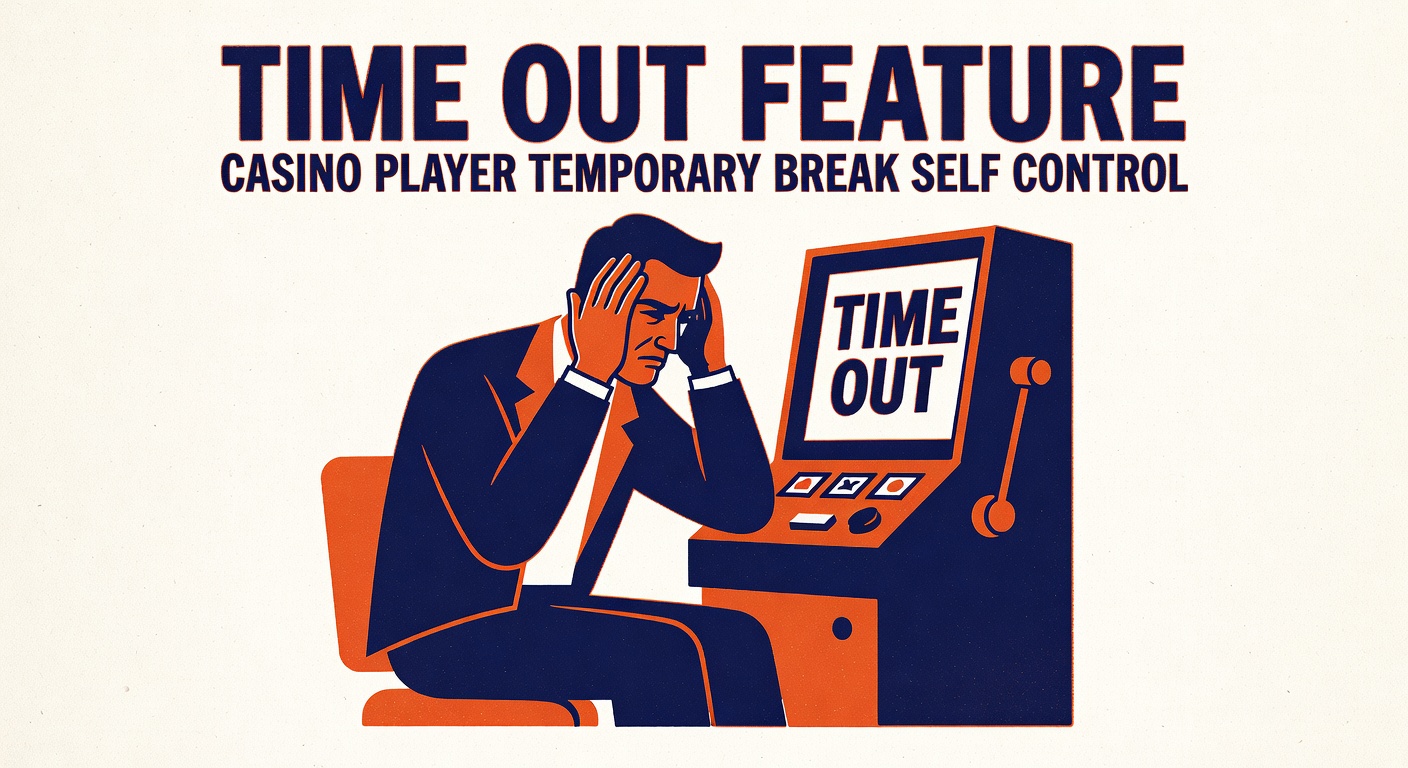
Most major online casinos have a self-restriction tool called a time-out or a break feature. It's not a permanent account closure. It's a pause. You request a break for 24 hours, 7 days, or 30 days. During that time, you cannot log in to your account. You cannot place bets. You cannot deposit money.
It's more aggressive than a deposit limit. A deposit limit lets you keep playing. You just can't put new money in. Time-out locks you out entirely.
Danny said he used it the first time when he realized he'd spent 400 euros in three days. He requested a 7-day break. For seven days, he couldn't access the site.
Here's the part that stuck with me: he said the first three days were hard. The urge to log in, to check his balance, to "just place one bet", that was constant. By day five, it felt different. The urge hadn't vanished. But the urgency had mellowed. By day seven, when the time-out expired, he didn't immediately log back in. He waited two more days.
Time-out works because it breaks the habit loop. You can't replace one compulsion with another if you're locked out. You have to face the time without gambling.
The Mechanism and How It Actually Works
From the casino's perspective, time-out is a retention tool disguised as a harm-reduction tool. When you request a time-out, the casino doesn't close your account. Your money stays there. Your data stays there. You still get promotional emails when the time-out expires.
Technically, time-out is implemented by flagging your account. The login server checks the flag. If a time-out is active, login is denied. That's it. Simple.
But here's the thing: the time-out only works on the site where you requested it. If you gamble at three different casinos, you need to request a time-out at each one. Danny didn't know this. He requested a time-out at one site and immediately signed up at another.
That's the gap between the tool and the problem. Time-out is site-specific. A serious gambling problem spans multiple sites. One time-out doesn't lock you out of everything.
When It Works and When It Doesn't
Time-out works best for impulse control problems. You lose 200 euros. Anger and shame hit you hard. You want to chase. Time-out locks you out before you make that decision. The break cools you down.
It doesn't work as well for chronic problems. If someone gambles compulsively every day, a 7-day break is a patch. When the break expires, they log back in and the pattern resumes.
I asked Danny if he used it again after the first time. He said yes, four more times over a year. Each time, it helped a little. But each time, he went back.
The limitation is obvious: time-out is optional. You have to choose it. A player in the grip of a problem isn't choosing rationally. The casino hopes you don't choose time-out. They hope you keep playing.
The Regulatory Angle
United Kingdom gambling operators must offer time-out as a self-restriction tool. It's regulated by the UK Gambling Commission. Most European operators offer it because it's cheaper than defending lawsuits. A time-out that you voluntarily requested looks better in court than no tool at all.
Some operators make time-out easy to access. Others bury it in the Responsible Gambling page, three clicks deep. Pragmatic Play, which powers slots at many casinos, built time-out into their player interface. You can access it from the main menu. But at operators using white-label solutions, time-out might be harder to find.
That matters. The easier the tool is to use, the more players use it.
Danny's Ending
Danny eventually stopped gambling. It wasn't time-out that did it. It was his girlfriend finding out how much he'd lost. The confrontation and the fear of losing her pushed him to stop in a way that no self-restriction tool could have.
Time-out was a useful speed bump along the way. It bought him time to think. But the real brake came from consequences he couldn't avoid.
He said to me, "Time-out's not nothing. But it's also not a solution." That stuck with me. It's exactly right. It's a tool for someone who's trying to cut back. It's not a tool for someone who needs to stop entirely.
Most players don't even know it exists. That's the real problem. Not that the tool is weak, but that it's invisible.