The Role of Smart Contracts in On-Chain Table Games
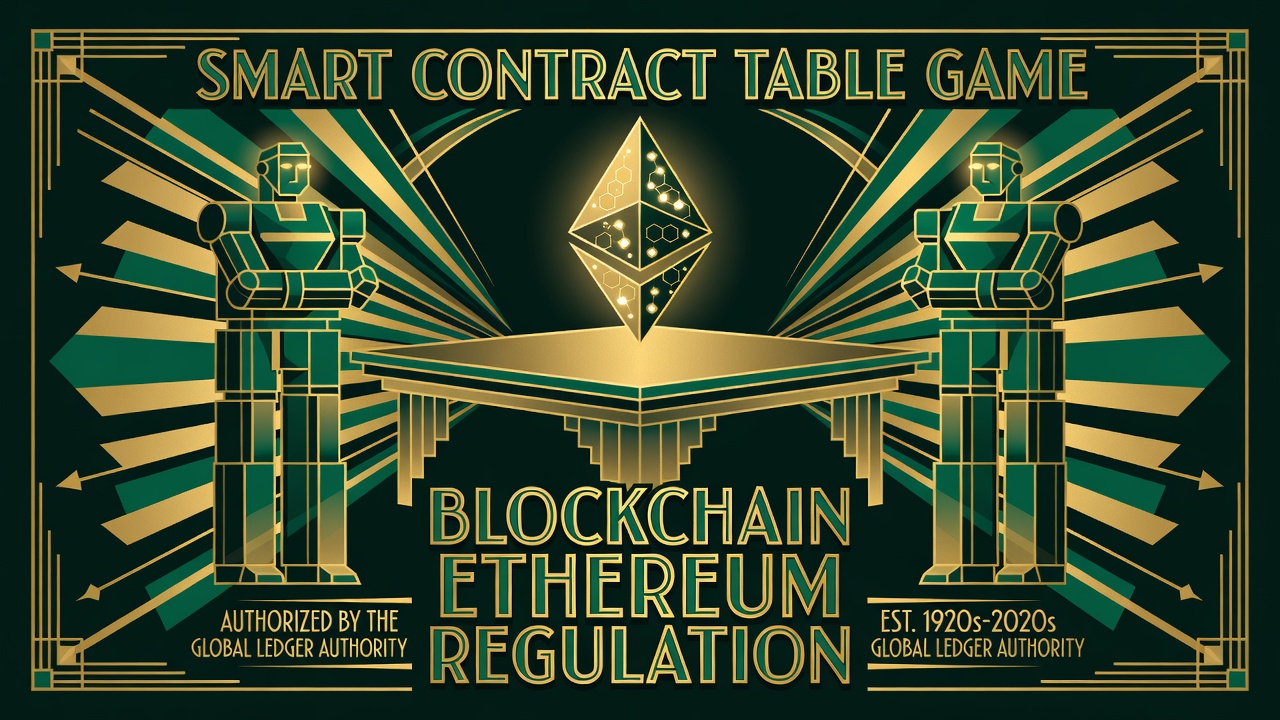
The blockchain is a record, not a license. A smart contract on Ethereum that purports to operate a roulette game is technically capable of determining
The blockchain is a record, not a license. A smart contract on Ethereum that purports to operate a roulette game is technically capable of determining which red or black ball landed. But Ethereum is not licensed by the Malta Gaming Authority or the UK Gambling Commission.
Key Points
No network is.
Blockchains are not legal entities. They cannot hold licenses.
This is the tension that on-chain table games navigate
A few operators have built games using smart contracts on Layer 2 Ethereum networks. Thales Protocol runs prediction markets that function like binary bets. Polymarket runs sports betting using crypto infrastructure. None of these are licensed casinos. They are smart contracts that anyone with an Ethereum wallet can interact with. The legal status of this is contested.
In the US, the question is whether a smart contract that processes wagers and distributes payouts is a gambling operation for purposes of the Wire Act. The Department of Justice has never explicitly ruled. In Europe, the question is whether a smart contract operated by an anonymous operator violates the licensing requirements of the relevant member states. The answer in most cases is yes.
The advantage of on-chain table games is transparency. A Keccak256 hash of a random seed posted on the blockchain before the outcome is determined is, in principle, provably fair. No RNG can be secret or manipulated after the seed is posted. You can verify the fairness of every outcome yourself by running the verification script.
The disadvantage is liquidity. An on-chain roulette game with five users playing has a much lower expected volume than a licensed casino with thousands of concurrent players. Volatility is higher. Spreads are wider. For casual players, the experience is worse.
The other disadvantage is legal exposure. An operator running an on-chain casino from the US could potentially be prosecuted under the Illegal Gambling Business Act, even though no specific license is being violated. The statute prohibits anyone from operating any gambling business in the US. What makes it a business is facilitation and promotion of wagering. A smart contract that handles payouts out might qualify.
The comparison that makes sense is between on-chain casinos and unregulated offshore casinos. Both lack formal licensing. Both carry legal risk in many jurisdictions. The on-chain casino has the advantage of transparency and the disadvantage of low liquidity. The offshore casino has the advantage of operational maturity and the disadvantage of opacity.
For most players, the choice is not between on-chain and licensed. The choice is between licensed and offshore. On-chain is a third option that is slowly becoming viable as liquidity increases. The underlying principle is that exploitation works when your opponents are not playing optimally. Most of your competition is not optimal. They are human. They are tired. They are emotional. They are making mistakes. The strategy that works against mistakes is the strategy you should play. Not the strategy that works against perfect play. Not the strategy that works in theory. The strategy that works against the actual people you're facing. The regulatory challenge for on-chain gambling is that blockchains don't have borders. A smart contract deployed on Ethereum can be accessed from anywhere in the world, including jurisdictions where it's illegal. This creates an enforcement problem. A regulator in the UK can't shut down a smart contract because the smart contract is distributed across thousands of nodes globally.