How Multi-Camera Angles Work in Live Baccarat
Why do live baccarat tables have eight cameras? Each serves a specific purpose in the theatre of proof.
The Question at Hand
One might ask: what does a player truly know when they watch a card dealt in live baccarat? They see the dealer's hands. They see the cards. But what assurance have they that the cards are genuine? What proof exists that the shuffle was fair, the deal was random, and the cards are not marked?
These are not new questions. Philosophers have asked them for millennia. In Plato's Republic, Socrates examines the nature of knowledge and proof. How do we know what we know? What is the difference between appearance and reality?
Live baccarat solves this problem through what one might call a "proof theatre." Multiple cameras. Multiple angles. Multiple witnesses (the viewers watching live). The effect is to reduce the epistemic gap between what appears to be true and what is true.
The Purpose of Each Angle
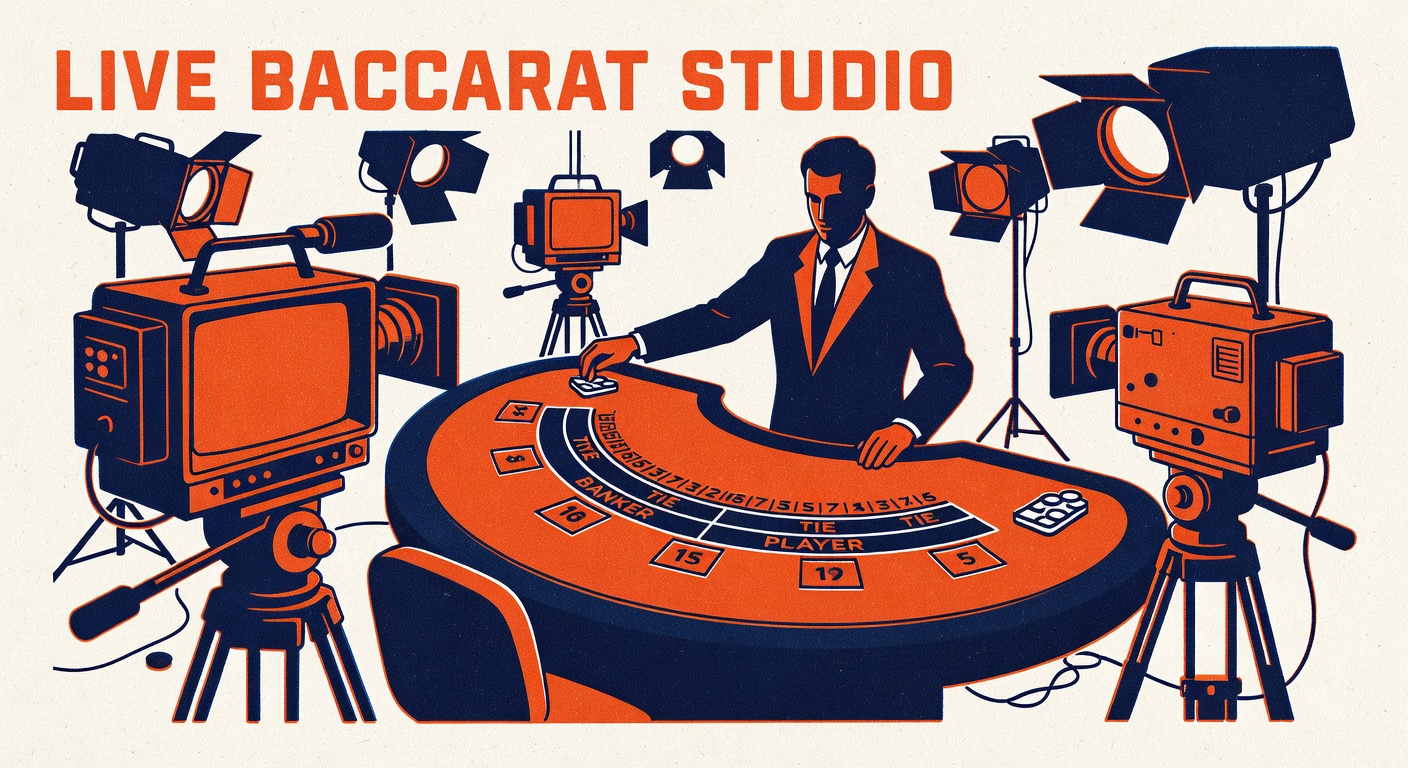
A live baccarat table typically has eight to twelve cameras. Each serves a specific function.
Two or three cameras capture the general overview: the whole table, the players, the dealer. These show the context and the general flow of play. They establish the scene.
Two cameras focus on the shuffle and the cutting. One camera from above, one from the side. These two angles together make it extremely difficult to palming a card or manipulating the deck during the shuffle. If both cameras show a clean shuffle, the odds of undetected manipulation are minimal.
One or two cameras focus on the deal: the dealer's hands, the card placement, the card flip. These angles verify that the dealer dealt from the top of the shoe, that no cards were switched or withheld, and that the cards revealed were the cards dealt.
One camera captures the shoe itself: the exact location of the shoe, the card flow from the shoe, the position of the cut card. This verifies that the dealt cards came from the shoe and not from a hidden source.
One camera captures the players' reaction and the betting area. This isn't about detecting cheating. It's about verifying that the game is proceeding as represented: bets are placed, cards are dealt, outcomes are final.
The purpose is not prevention of cheating (though that's an effect). The purpose is proof. Each camera adds a layer of verification that the game was fair.
The Philosophical Function
From an epistemological standpoint, this is a response to skepticism. A skeptic might say: how do you know the baccarat game was fair? You saw it on a screen. Screens can be manipulated. Video can be doctored.
Multiple independent camera angles, recorded simultaneously, make doctoring exponentially harder. You'd need to alter multiple video streams consistently, ensure they don't contradict each other, and do all of it in real-time or in post-production under extreme scrutiny.
The redundancy of the multi-camera system isn't primarily about catching cheating (though it does that). It's about reducing the epistemic space where doubt can exist. By showing the same event from multiple angles, each camera corroborating the others, the house closes off the logical possibility of large-scale deception.
Yet doubt remains possible. A skeptic might say: all the cameras could be part of the deception. The whole operation could be false. That's logically true but pragmatically absurd. The more angles you add, the more you ask a skeptic to believe is false, the less reasonable their skepticism becomes.
The Practical Implementation
Regulated live-casino operators use certified cameras and recording systems. The recordings are often audited by third parties. A regulator can examine the footage and verify that the shuffle was genuine, the deal was fair, and the outcome was accurate.
Some jurisdictions require that live-casino footage be retained for a specific period (usually months or years) to allow for later dispute resolution. If a player claims the game was rigged, the footage can be reviewed.
This creates a record. The proof persists beyond the moment of play.
Unregulated live-casino operators sometimes use fewer cameras or lower-quality video. Some don't record at all. The quality of the camera system correlates with the trustworthiness of the operator. Serious operators invest in proof infrastructure. Fly-by-night operators skimp.
Why This Matters to Players
For a player, the camera system is a guarantee. You're not trusting the dealer's integrity or the casino's honesty. You're verifying through multiple independent video streams that the game was fair.
This doesn't eliminate the house edge. The cards are genuine. The shuffle is fair. The odds are fair. But the house still has a 1.06 percent advantage on Banker bets and 1.24 percent on Player bets. The cameras don't change that.
What the cameras do is eliminate one category of doubt: whether the game was rigged against you specifically. You can watch the footage afterward and know, with certainty, that the dealer didn't palm a card or switch a result.
That's the value. Not that you'll win, but that you'll lose fairly. In a game where the odds are against you, fairness is the consolation.