The MIT Blackjack Team: How Students Really Beat Vegas
The MIT team was real, but the movie version omitted critical details. Here's what actually happened.
The Setup and The Methodology
Starting in the mid-1980s, a rotating group of MIT students organized card-counting operations at Vegas casinos. The core team varied from 10 to 30 members across its peak years. They weren't a single static team but a revolving coalition of players, spotters, and managers.
The system was: spotters would play basic strategy at blackjack tables, keeping a card count. When the count was favorable (high-card heavy), they'd signal a "big player" (a team member with larger bankroll authority) to join the table and bet heavily. The big player would play roughly 10-15 hands at high stakes, then leave when the count returned to neutral. This reduced their exposure to negative-count shoes.
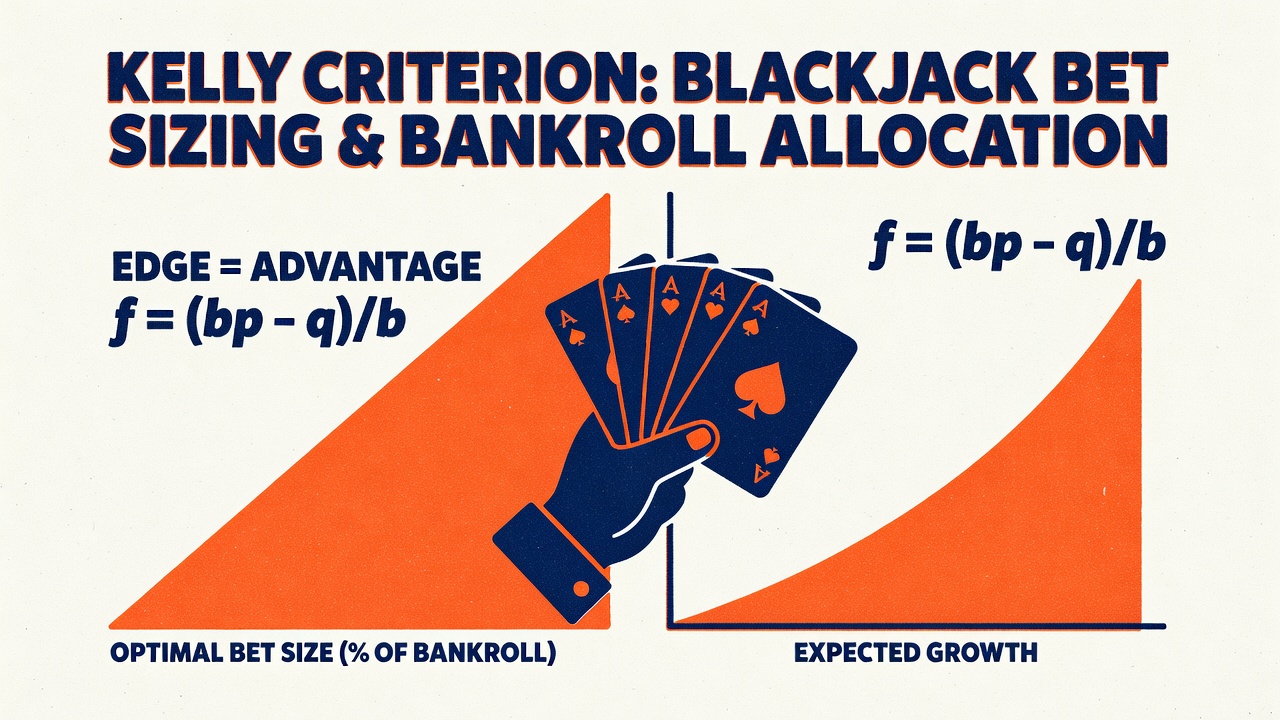
Methodology: They tracked true count precisely. They managed bankroll according to Kelly Criterion, a mathematical framework for optimal bet sizing. They varied their appearance and playing schedules to avoid detection. They played together but not together, rotating through multiple casinos on multiple nights.
The MIT team's actual edge was roughly 0.4-0.6 percent over their playing period (1985-2000). That doesn't sound large. Over a season of play, with millions in wagered money, it produced consistent six-figure returns.
According to Ben Mezrich's account in "Bringing Down the House" (later adapted into the film "21"), the team's internal documentation shows total profits of approximately 4-5 million dollars across its operational period. That's significant but not the Hollywood bonanza depicted in the film.
What The Film Omitted
"21" (2008) dramatized the team's story but simplified and exaggerated critical elements.
First: the film depicts the team as outsiders defeating the casino industry. In reality, they were primarily affluent Boston-area students who could afford to sustain variance and travel. They were not underdogs. They were privileged kids with math skills and bankroll.
Second: the film shows the casino figuring out the counting operation and dramatically confronting the team. In reality, casinos noticed card counters but had limited ability to stop them legally. The team eventually stopped playing, not because casinos caught them, but because the casinos implemented countermeasures (shuffle points, continuous shufflers, reduced penetration) that made the game unbeatable. By 2000, the profitable opportunities had evaporated.
Third: the film shows the team's downfall. In reality, the team members graduated and moved into finance jobs, software engineering, and other careers. They didn't get barred and have their lives destroyed. They made money, graduated, and moved on.
The Actual Economics
The team's profitability required scale. With a small bankroll and a small team, card counting doesn't work. You need enough variance-absorption capital that short-term fluctuations don't bankrupt you.
The MIT team had roughly 500,000 to 1,000,000 in bankroll at its peak. That's capital raised from wealthy team members, parents, and investors. With that capital and proper Kelly Criterion betting, they could sustain playing through negative variance and benefit from periods of positive variance.
Their per-hand edge was small (0.4-0.6 percent). But they played thousands of hands. 0.5 percent edge on 100,000 hands (a single player's annual volume) at average bet sizes of 300 dollars produces roughly 150,000 dollars in profit.
That's after travel, accommodation, and opportunity costs. For college students, it's excellent. For professional gamblers, it's modest.
Why The Team Worked
The team worked because card counting is simple mathematics with consistent application. The mathematics doesn't care about emotion or variance. If you count correctly and bet proportional to the count, you generate positive expected value.
The team worked because they had capital and patience. They played through losing periods. They didn't abandon the system because of short-term variance.
The team worked because they managed their appearance. They dressed normally. They ordered drinks. They tipped dealers. They didn't look like professional gamblers. Pit bosses watched for obvious signs: excessive money betting, tight play, no drinks, all-business demeanor. The MIT team looked like drunk college kids gambling for fun.
The team eventually stopped working because casinos adapted. Continuous shufflers made counting impossible. Reduced penetration reduced the counter's edge to marginal. The free-money period ended.
The Lesson
The MIT team proved that casino games can be beaten through skilled play and bankroll management. That insight has echoed into sports betting, poker, and other games. But the conditions that allowed their success (casino vulnerability to card counting, consistent penetration) no longer exist.
Modern blackjack is designed to resist counting. Continuous shufflers use randomized shuffle points. Penetration is reduced to 50 percent of the shoe. Some casinos use multiple shoes with constant reshuffling. The profitability that existed in the 1990s doesn't exist in the 2020s.
The MIT team's real contribution was demonstrating that the edge exists for smart players. It was a one-time revelation, not a renewable strategy. Everyone learned from it. Casinos especially learned from it. What worked for MIT in 1990 cannot work for anyone in 2024.