Geo-Restriction Basics: Why Casinos Block Certain Countries
Geo-blocking is both regulation and business strategy. Understanding the distinction clarifies the practice.
The Regulatory Framework
Gaming licences issued by European regulators such as the Malta Gaming Authority or the UK Gambling Commission restrict where operators may legally offer their services. A casino licensed in Malta may not legally accept wagers from players in the United States, where federal law prohibits unlicensed online gambling. That restriction is legally binding. The casino must enforce it or risk losing its licence.
Accordingly, casinos implement geo-blocking: technology that identifies a player's location and prevents access if that location falls outside the operator's licensed jurisdictions. The mechanism typically involves checking IP address geolocation, although some operators layer additional verification (GPS coordinates, phone number registration, banking information origin).
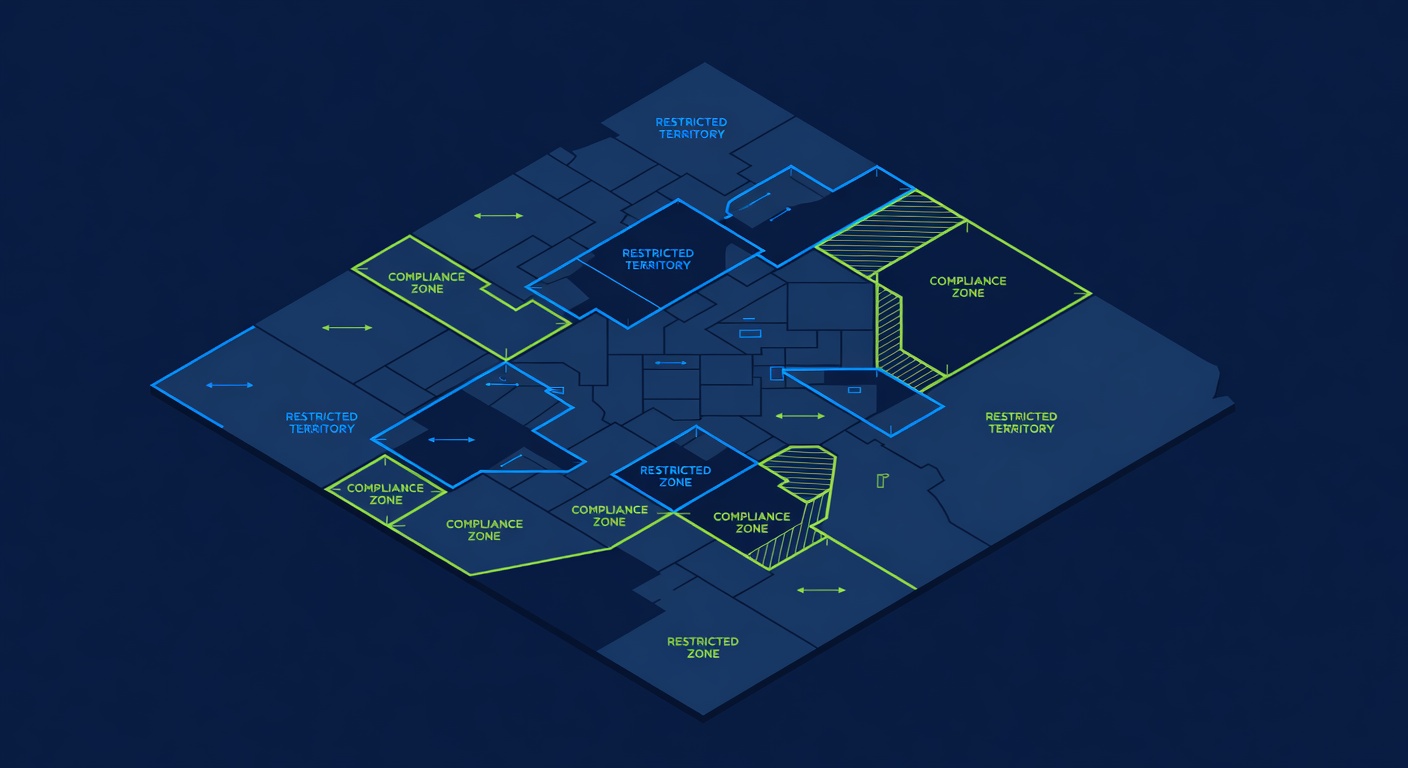
The geographical restrictions vary by jurisdiction. The UK Gambling Commission permits UK-licensed operators to serve players in Great Britain and Northern Ireland. The Swedish gambling regulator permits operators to serve players in Sweden. A casino might hold multiple licences and therefore serve multiple jurisdictions, each with its own restricted territory.
The Business Rationale Beyond Regulation
However, regulation is only part of the story. Operators also implement geo-blocking for economic reasons that have nothing to do with legal requirements.
Consider a scenario: a casino holds a licence in Curaçao, which has minimal regulatory oversight. Technically, the operator could accept players from any jurisdiction. Legally (in most interpretations), they cannot accept players from the United States, where there is a federal statute against unlicensed gambling. But they could accept players from many other countries without legal consequence.
Yet most Curaçao-licensed operators block access from developed markets such as Canada, Australia, and most of Europe. Why? Because accepting players from those jurisdictions creates complications. Those jurisdictions have consumer protections that Curaçao does not. A player from the United Kingdom losing 10,000 pounds at a Curaçao-licensed casino might claim unfair terms and pursue legal remedies in UK courts. The Curaçao operator has no defence because they're not properly licensed in the UK.
Accordingly, operators implement geographical restrictions not because the law requires them, but because their business model requires them. They operate in unregulated or minimally regulated jurisdictions specifically to avoid the costs of compliance with stringent consumer protections. Accepting players from regulated jurisdictions undermines that business model.
Geo-blocking is therefore both a regulatory compliance tool and a business strategy to maintain low-cost operations.
How Geo-Blocking Fails
Geo-blocking relies on IP geolocation, which is imprecise. IP addresses are assigned by region, but the link between IP and actual location is loose. A player in Spain might use a VPN routed through Germany. Their IP appears German, but they're physically in Spain. The casino might grant access when proper restriction would deny it.
Moreover, IP geolocation databases are frequently outdated. A residential IP address assigned to a London provider two years ago might still be listed in a geolocation database as London even after the provider's address block was reassigned to a provider in Brussels. The data is delayed and therefore unreliable.
Some operators require additional verification (phone number, banking details). These methods are more accurate but also more friction. Requiring a UK player to verify their location via banking information identifies them as higher-risk and expensive to serve, which some operators accept and others find economically unfeasible.
The Practical Consequences
Geo-blocking is porous. Players routinely circumvent it using VPNs, residential proxies, or by creating accounts while travelling outside their home jurisdiction. Enforcement is difficult because the operator doesn't have physical presence in the player's jurisdiction.
A Swedish player using a VPN routed through Malta might access a Curaçao-licensed casino that's technically restricted from serving Sweden. The operator's systems see a Malta IP address. The operator grants access. The player plays. If the player wins and requests withdrawal, the operator might then verify the player's actual location (through banking information), discover they're Swedish, and refuse the withdrawal under the grounds that service to Sweden is restricted.
This creates a perverse outcome: a player can play and lose without restriction, but cannot win and withdraw. From the player's perspective, the geo-blocking is one-directional. From the operator's perspective, it's risk management. The operator accepts the wager (and the house edge) but refuses the withdrawal if unexpected loss occurs outside permitted jurisdictions.
Current Trends
Larger operators are moving toward stricter geo-enforcement because reputational risk is increasing. A Swedish regulator might pursue action against a Curaçao operator that knowingly serves Swedish players. The costs of that dispute (legal fees, potential fines, reputational damage) are beginning to exceed the revenue from serving unregulated jurisdictions.
Smaller operators continue to take a permissive approach to geo-blocking, treating it as a warning rather than an enforcement mechanism. Those operators are betting that they're small enough not to attract regulatory attention and flexible enough to exit their current jurisdiction if enforcement escalates.
The trend toward stricter enforcement is consistent with the broader pattern: gaming is moving toward regulation globally. The unregulated space is shrinking. Operators that built business models on geographical arbitrage are facing structural headwinds. Geo-blocking will likely become more restrictive, not less, as enforcement mechanisms improve.