Blackjack Side Bets: Which Ones Give Players a Fair Shot?
Side bets promise quick money but exact a hidden cost. A look at what's fair and what's just pure temptation.
I sat down at the felt on a Tuesday night, and the dealer showed me his hand. Insurance. Perfect Pairs. Lucky Ladies. Names that promise something, anything, a way to beat the odds without playing the actual game. I've been in enough casinos to know that names like these are the devil's own marketing.
There's a game inside the game, you see, and the side bet is that game. The blackjack itself, the classic 21, that's the long war. The side bet is a chance at quick victory. And quick victories against the house are the rarest thing there is.
The Structure of Temptation
A side bet doesn't require you to have good cards. It doesn't ask you to beat the dealer. It asks you a single question: will this next card create the outcome I'm betting on? The payout comes fast. You're not waiting through a hand that stretches across the felt. You win or lose before the dealer even hits.
That speed is the hook. That speed is also the problem.
Consider Perfect Pairs. You're betting whether your first two cards will be a pair. If they match exactly in suit, you get paid 25 to 1. If they match in rank but not suit, you get 10 to 1. The basic pair pays 6 to 1. These numbers sound generous until you do the mathematics.
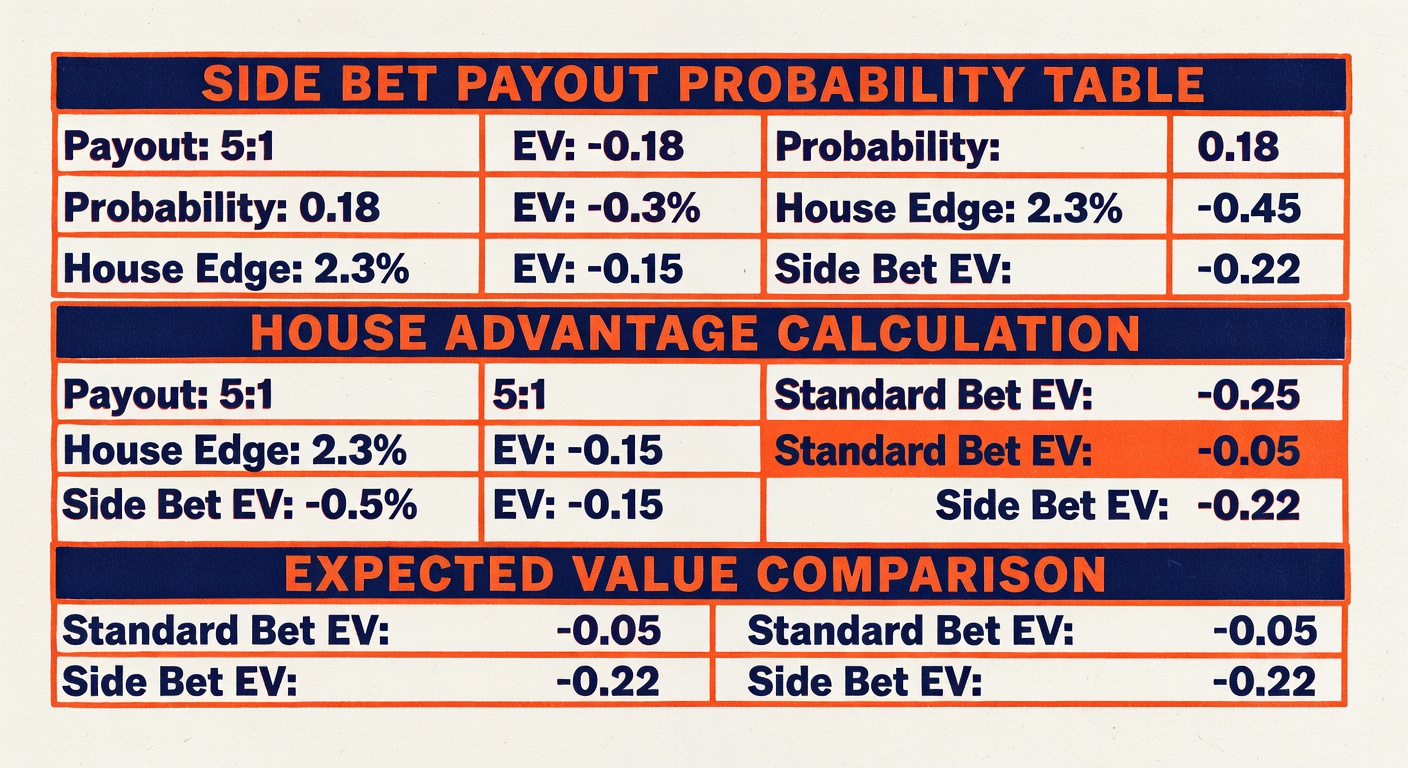
The house edge on Perfect Pairs runs between 2.5 and 3.3 percent, depending on the specific rules the house writes. That's worse than the base game of blackjack, which sits at 0.5 percent if you play basic strategy perfectly. You're paying for those high payouts with a mathematically harsh edge.
When you take side bets, you're not hedging your blackjack. You're taking a second, worse game and grafting it onto the first one.
I preached for thirty years before I came to the tables full-time. I know temptation. I know how it works. It shows you a number so large that your mind stops questioning. Twenty-five to one. Look at that. Look at what you could win. The voice of reason gets quiet when the numbers get that big.
Which Side Bets Treat You Least Badly
Not all side bets are created equal. Some are genuinely punishing. Others are merely bad. Here's the honest count.
Insurance is a side bet that protects you if the dealer has blackjack. You're betting that the dealer's hole card is a ten-value. The payout is 2 to 1. The house edge is a crushing 5.4 percent. Never take insurance. I don't care how strong your hand is.
Twenty-One Plus Three looks at your cards and the dealer's up card. Are you betting on a flush? A straight? The house edge ranges from 2 to 4 percent depending on the specific variant. Not good.
Lucky Ladies checks whether your first two cards total 20. If you get exactly 20, you win even money. If both cards are red and you have 20, you get 4 to 1. If both are the Queen of Hearts, you win 1,000 to 1. That last number pulls you in. That edge? Somewhere between 2 and 2.5 percent.
The Honest Conversation
I'll tell you straight. No side bet at a blackjack table is good for you. The best of them are worse than basic-strategy blackjack. The worst of them are predatory.
But if you're going to take a side bet because the speed appeals to you, because you want to feel like you could hit big tonight, then at least understand what you're doing. You're not supplementing your blackjack strategy. You're abandoning it. You're playing a different game with worse math, and you're playing it at a higher house edge.
Some nights I see a man at the table with his wife. They're here for fun. They place a side bet. He doesn't expect to win. She smiles when the odds break their way. That's not degenerate. That's entertainment. But understand it as such. Don't tell yourself the math works. It doesn't. The side bet is a tax on wanting to win big. Pay it if you want. But know what you're paying for.