A Beginner's Guide to Poker Staking and Backing Deals
Poker staking is the practice of one person putting up money for another person to play poker with, taking a percentage of the winnings in exchange. I
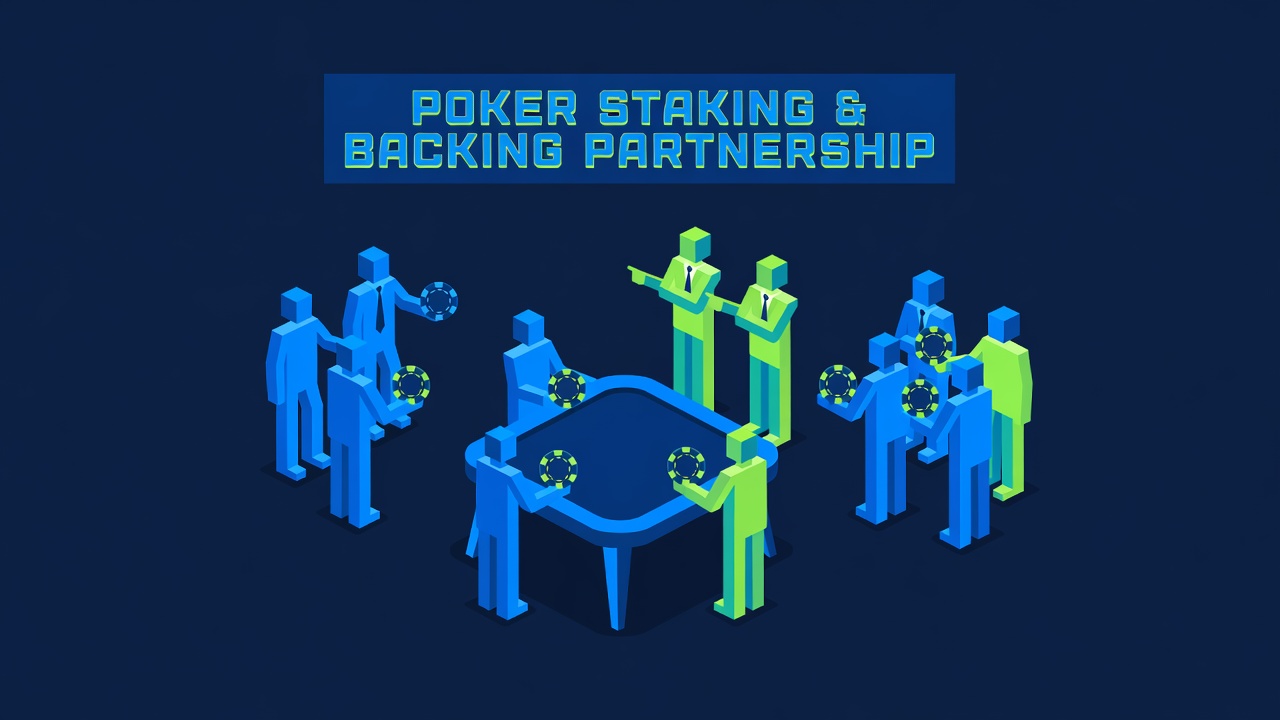
Poker staking is the practice of one person putting up money for another person to play poker with, taking a percentage of the winnings in exchange. It's both an investment strategy and a form of labor.
The investor's perspective: A backer gives a player one thousand dollars, takes a 50 percent piece of the profits. If the player makes two hundred dollars, the backer gets one hundred.
Key Points
The backer is making a return on capital without playing poker themselves.
They're outsourcing the work. But they're also taking the downside risk. If the player loses, the backer loses
The player's perspective: A staked player has their downside risk eliminated. They can play for money they didn't earn. If they lose, they lose the backer's money, not their own. This is psychologically powerful. It removes the consequence of failure. Some players play better when unstaked because they're playing for their own chips. Some play better when staked because they're not afraid to take risks. The variation is individual.
The mechanics:
A backer gives a player a fixed stake, say five thousand dollars. The player plays cash games or tournaments with that money. The backer specifies the terms of the engagement: the percentage split on winnings, the term length, the types of games the player is allowed to play, whether the player can use rake-back or bonuses.
A typical staking deal is 50-50 on wins and 100-0 on losses. The player doesn't contribute capital. They contribute labor. If they're a skilled player, this is a good deal. If they're not, they'll lose the backer's money and find themselves unemployable.
The other model is hourly billing. A backer pays a player a fixed hourly rate, say fifty dollars per hour, to play poker. The backer takes a percentage of the profits, say 20 percent. This is less common because it creates perverse incentives. The player wants to maximize hours played, not hours played well.
Backing is a solution to a specific problem: capital allocation in a skill game. In poker, the best players make the most money, but the best players also have limited capital because they're usually young and haven't accumulated wealth yet. Backing allows capital to find skill.
The disadvantage is that backing creates a principal-agent problem. The backer wants the player to play tightly and efficiently. The player might want to take variance and play loosely. The backer has limited visibility into the player's decisions. They see only the results.
For a player starting out, staking is often the only way to get capital to play with. For a backer, staking is a way to generate returns without playing poker themselves. The equilibrium price is usually 50-50 on wins, which implies that the backer believes the staked player is expected to generate zero net profit if they were paying rake. But skilled players beat rake. So staking is profitable for both parties. The underlying principle is that exploitation works when your opponents are not playing optimally. Most of your competition is not optimal. They are human. They are tired. They are emotional. They are making mistakes. The strategy that works against mistakes is the strategy you should play. Not the strategy that works against perfect play. Not the strategy that works in theory. The strategy that works against the actual people you're facing.