How Slot Math Models Are Built: An Inside Look
Building a slot math model requires understanding RNG, symbol weighting, and payout schedules. Here's the structure.
The Random Number Generator Foundation
A slot machine generates random numbers continuously. The RNG is a pseudorandom number generator, which means it's mathematically deterministic but produces sequences that pass tests for randomness. Most modern slots use Mersenne Twister or a similar algorithm.
The RNG doesn't generate numbers between 1 and 10. It generates numbers across its full range, typically 0 to 2^32 minus 1 or 0 to 2^64 minus 1. Four billion different possible outputs or more.
When you hit spin, the machine takes the current RNG output and maps it to a reel outcome. That mapping is the heart of the model.
Symbol Weighting
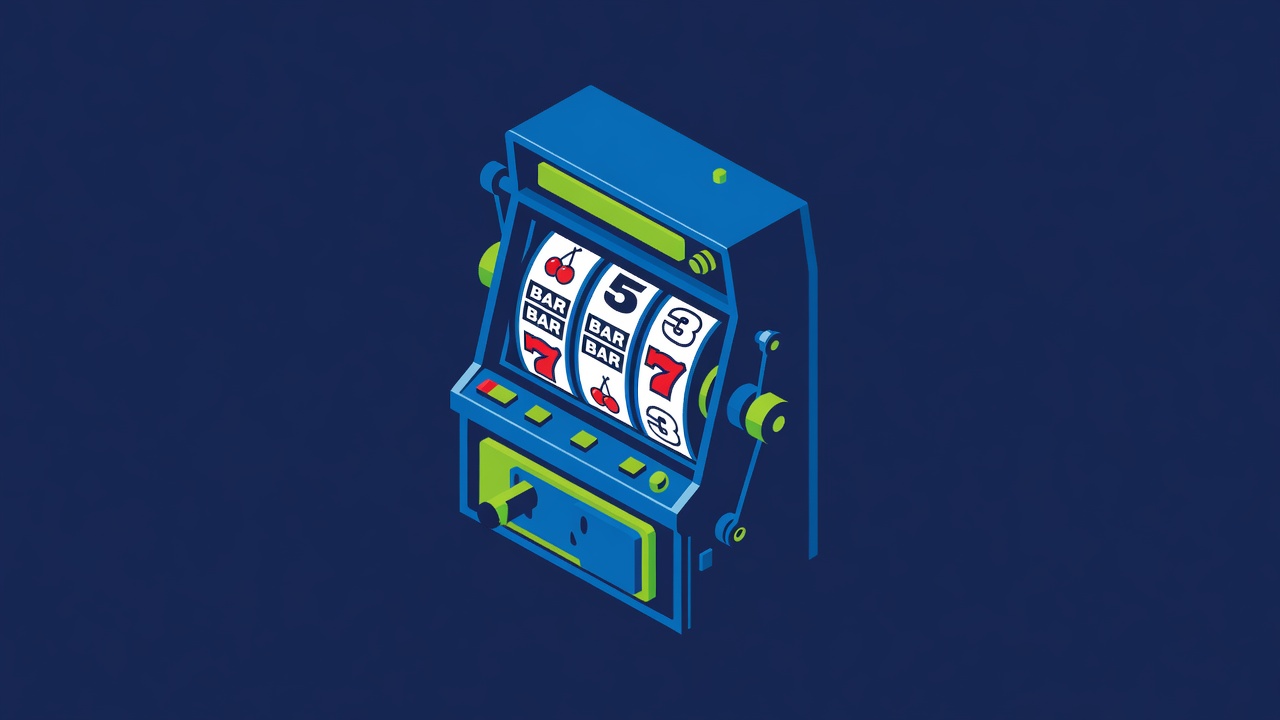
Each symbol on a reel has a weight. On a traditional three-reel machine, you might have BAR symbols weighted at 50, Cherry symbols at 30, and Seven symbols at 10. The total weight is 90.
When the RNG generates a number for the first reel, the machine divides that number modulo 90. The remainder (0 to 89) maps to a symbol. 0-49 is BAR. 50-79 is Cherry. 80-89 is Seven.
But here's the complication: the RNG output isn't evenly distributed across the modulo result. Instead, the machine normalizes the RNG output to the 0-89 range. This is where the math gets tight.
The theoretical behavior depends on precise implementation. If done correctly, each symbol gets selected with probability equal to its weight divided by the total weight. A BAR symbol with weight 50 out of 90 total gets selected 55.6 percent of the time.
Decades ago, slot manufacturers couldn't afford to do this calculation correctly. Cheaper machines had skewed probability distributions. Modern slots, particularly Aristocrat and IGT machines, use proper normalization.
The skill is in understanding that symbol weighting creates the house edge. If BAR symbols are weighted heavier, and BAR symbols have low payouts, the house edge increases. If Seven symbols are weighted lighter, and Seven symbols have high payouts, the house edge decreases.
Payout Schedule Construction
Once you know the symbol probabilities for each reel, you calculate the probability of each outcome.
Three BARs: (50/90) * (50/90) * (50/90) = 0.153. About 15.3 percent chance. The payout might be 40 to 1.
Two BARs and a Cherry: (50/90) * (50/90) * (30/90) = 0.092. About 9.2 percent. Payout: 10 to 1.
One BAR and two other symbols: varied outcomes, varied payouts.
You build a table of every possible outcome and its probability. Then you sum: (probability of outcome A * payout of outcome A) + (probability of outcome B * payout of outcome B) + etc. That sum is the expected return.
If the expected return is 95, the machine returns 95 cents for every dollar wagered. The house keeps 5 cents. That's a 5 percent house edge.
Regulators require the math to match the tested outcome. If a regulator tests 10,000 spins and the machine's theoretical payout says it should return 9,500 dollars, the actual result should be close to that (within acceptable variance). Most regulators allow 2 percent variance from theoretical.
Modern Complications
Classic three-reel slots are straightforward. Modern video slots are infinitely more complex.
Video slots have bonus rounds triggered by specific symbols. Those bonus rounds have different payout schedules than the base game. The math model has to account for the probability of triggering the bonus, the expected return within the bonus, and the combined expected return across base game plus bonus.
Wild symbols and multipliers add another layer. A wild symbol that substitutes for any other symbol increases the probability of certain winning combinations. A 2x multiplier on a specific symbol increases its payout. All of this requires recalculating the probability of every outcome.
Some slots have different paylines (1 payline, 5 paylines, 25 paylines, 100 paylines). Each payline adds combinations. More paylines increase the volatility and the complexity of the math model.
The Regulatory Relationship
Mathematicians build the model. Engineers code it into the machine. Testing labs verify the machine behaves as the model predicts. Regulators audit the testing lab's methodology.
The chain is tight because a machine that doesn't match its certified payout model is cheating. That's a felony in most jurisdictions.
I spent two years building models for Aristocrat before I did the road. The work was clean: probability, integration, verification. No guessing. No "feel." If the math says a Seven should appear once every 10 spins, it appears once every 10 spins.
That certainty is what makes it work. The house edge isn't built on deception. It's built on mathematics that's been calculated, verified, and proven. The player knows the odds. The odds are unfavorable. That's the deal.