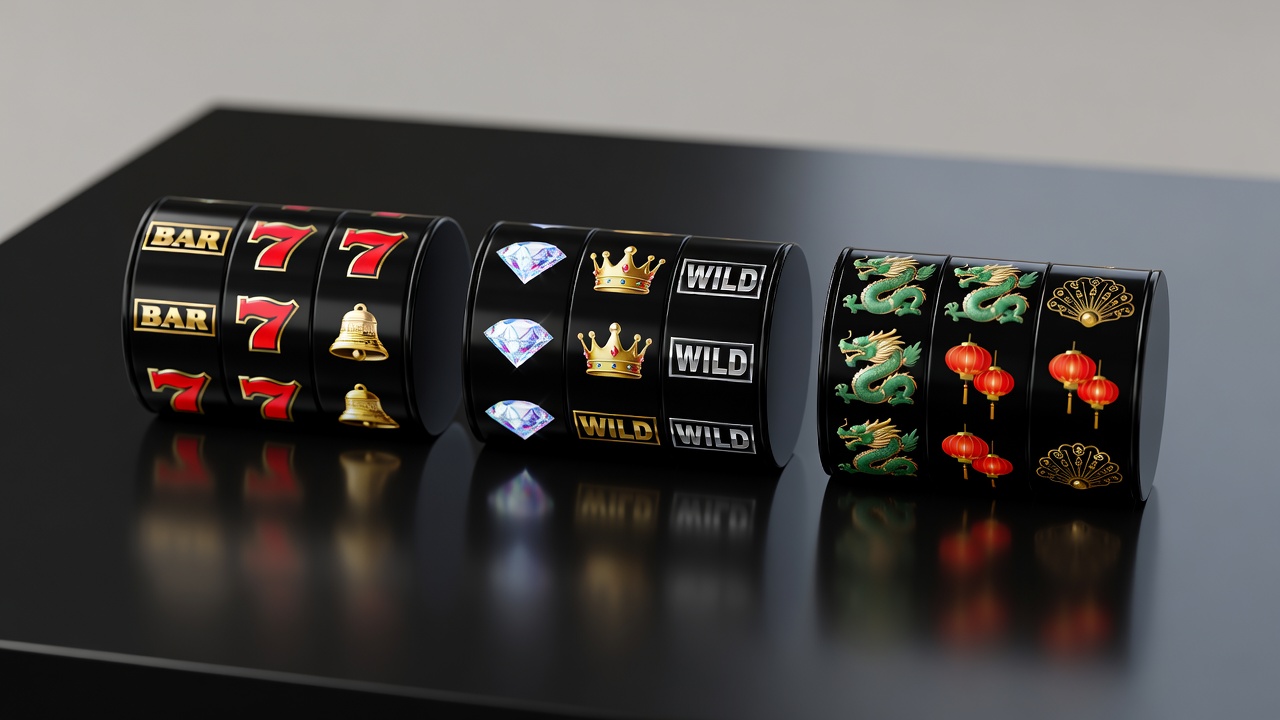
NetEnt and Novomatic Reel Layout Contrasts
Three games illustrate how NetEnt and Novomatic approach reel construction, with clear differences in strip lengths and mechanics that shape each studio's math profile.
NetEnt and Novomatic build slots with distinct reel architectures that directly influence hit frequencies and payout distributions.
Reel Length Patterns
Alwayshot from Novomatic runs three reels of exactly 42 symbols each. Beetlemania stretches to five reels where four sit at 44 symbols and the middle reel reaches 48. Gonzosquest from NetEnt uses five reels of unequal lengths: 34, 37, 35, 36 and 32.
These choices affect symbol distribution density before any pay evaluation occurs. Uniform lengths create even probability across positions while varying lengths allow targeted weighting on specific reels. The 3 by 3 format in Alwayshot concentrates all action into a compact grid that repeats the same strip length three times in a row.
Mechanic Influence on Layout
Alwayshot and Beetlemania both operate on fixed lines, yet their reel counts differ sharply. Gonzosquest replaces lines with cascades, allowing symbols to drop through the same five-reel frame. The cascade structure pairs with the shortest average reel in the set.
This setup changes how symbols interact over multiple evaluations in a single spin. Fixed lines require exact matches on predefined paths while cascades open repeated checks within one paid round.
Paytable Scale Differences
Maximum line pays reach 2500 in Gonzosquest, 5000 in Beetlemania and stay at zero for Alwayshot's ways mechanic. The paytable entries themselves occupy different positions in each game's symbol hierarchy.
- Alwayshot: 3x3 grid, uniform 42-symbol strips
- Beetlemania: 5x3 grid, one elongated 48-symbol strip
- Gonzosquest: 5x3 grid, five distinct strip lengths
The layouts alone already separate the two studios' approaches to symbol weighting.
Additional Math Considerations
Total reshuffles vary widely, with Gonzosquest at over 50 million compared to Alwayshot at around 74 thousand. Such differences scale the precision of computed RTP values across reel configurations.